
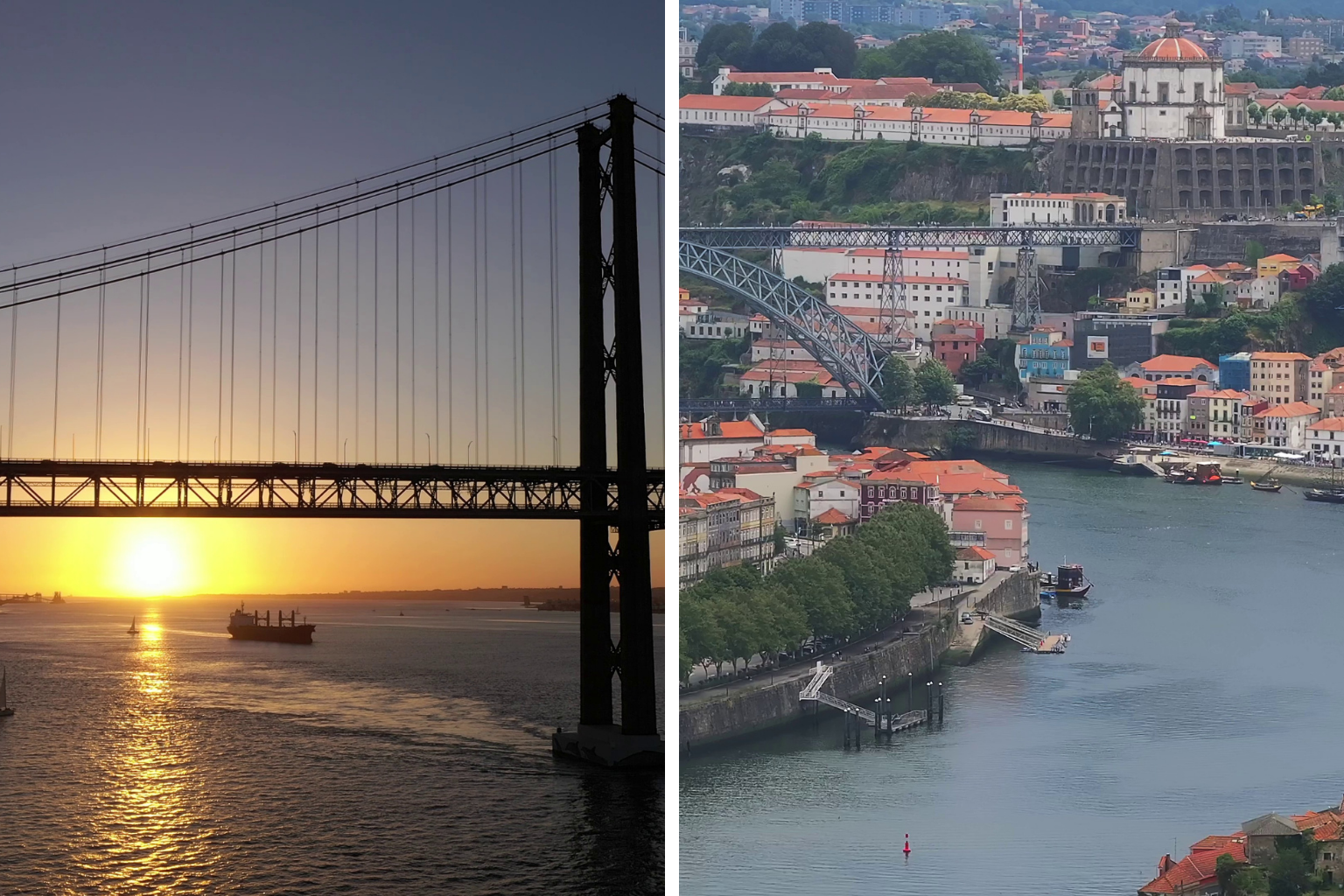
Portugal has quietly become one of Europe's smartest trips — genuinely beautiful, still comparatively affordable, and small enough that pairing its two great cities in a single week actually works without feeling rushed. Here's how I'd split the time.
The Split: 4 Days Lisbon, 3 Days Porto
Lisbon is bigger, hillier, and has more to fill a few days with — historic neighborhoods, the river, day trips to Sintra. Porto is more compact and best treated as a slower, wine-soaked coda to the trip. A high-speed train connects the two in under three hours, which makes the whole itinerary easy to execute without an internal flight.
Lisbon: Where to Stay
Lisbon's best neighborhoods for a first stay are Alfama for atmosphere, Chiado/Baixa for centrality, and Príncipe Real if you want a slightly more residential, boutique-heavy pocket of the city.
Memmo Alfama is one of my favorite picks in the city — tucked down a cobbled alley in the old town, with a rooftop terrace and small ruby-red pool overlooking the Tagus River and the rooftops of Alfama. It feels more like staying in a stylish Portuguese home than a hotel. If you'd rather be near the nightlife and dining of Bairro Alto, Bairro Alto Hotel is an 18th-century building turned self-contained boutique property, sitting right at the top of the hill so you're spared some of Lisbon's famous inclines.
Lisbon: What to Do
Ride the vintage Tram 28 through Alfama and Graça early in the day, before the crowds arrive — it's touristy for a reason, and the views are worth it. Spend a morning at Belém: the Jerónimos Monastery, the Belém Tower, and a stop at Pastéis de Belém for the original custard tart, which is worth the inevitable line.
Set aside a full day for Sintra, about 40 minutes outside the city by train. The colorful Pena Palace is the postcard shot, but Sintra's real charm is in wandering between its palaces and gardens rather than trying to see all of them in one visit — pick two, not five.
For dinner, Lisbon's fado houses in Alfama pair traditional Portuguese music with a set menu — an easy, atmospheric way to spend an evening if you only do it once on the trip.
Porto: Where to Stay
Porto is smaller and steeper than Lisbon, and Ribeira — the UNESCO-listed riverside district — is the heart of it. Staying there or just above it in the Baixa area keeps you within walking distance of the Dom Luís I Bridge, the port wine lodges across the river in Vila Nova de Gaia, and most of the city's best restaurants.
Porto: What to Do
Porto is, more than anything, a wine city, and the port wine lodges are the reason to go. The port wine lodges are technically across the river in Vila Nova de Gaia, a different municipality, and nearly two dozen historic cellars are open for tastings — you genuinely can't go wrong picking two or three and comparing. Graham's Lodge consistently comes recommended for its guided tastings, and Taylor's pairs a historic cellar tour with a terrace restaurant with sweeping river views.
In Ribeira itself, budget a slow riverside evening — a glass of port with dinner, overlooking the cellars across the water, is one of those simple pleasures that's hard to replicate anywhere else. Taberna dos Mercadores is a tiny, six-table spot serving traditional Portuguese dishes that's worth the wait if there's a line.
Don't skip Livraria Lello, the ornate bookshop with the famous crimson staircase — you'll need to buy a small voucher, redeemable against a book purchase, to get in, and buying it online ahead of time skips the street queue. And budget real time for simply walking — Porto's hills rival Lisbon's, so comfortable shoes aren't optional.
The Practical Bits
The train between the two cities (Lisbon's Santa Apolónia or Oriente station to Porto's Campanhã) is comfortable and easy to book in advance. Both cities are very walkable but genuinely hilly — this is not a trip for anything but broken-in, comfortable shoes.
Spring (April–June) and early fall (September–October) are the sweet spot for weather in both cities — warm enough to enjoy outdoor dining, without the peak-summer heat and crowds that hit Lisbon particularly hard in July and August.
Portugal has a way of feeling both grand and unpretentious at the same time — centuries of history delivered without much fuss, and food and wine that overdeliver relative to the prices. A week split between its two great cities is, for my money, one of the best-value trips in Europe right now.